Sewer line repair vs replacement: which does your home need
Repair or replace your Sioux Falls sewer line? Here's how camera inspection, pipe material, and 2026 costs decide it - and what we see in local homes.
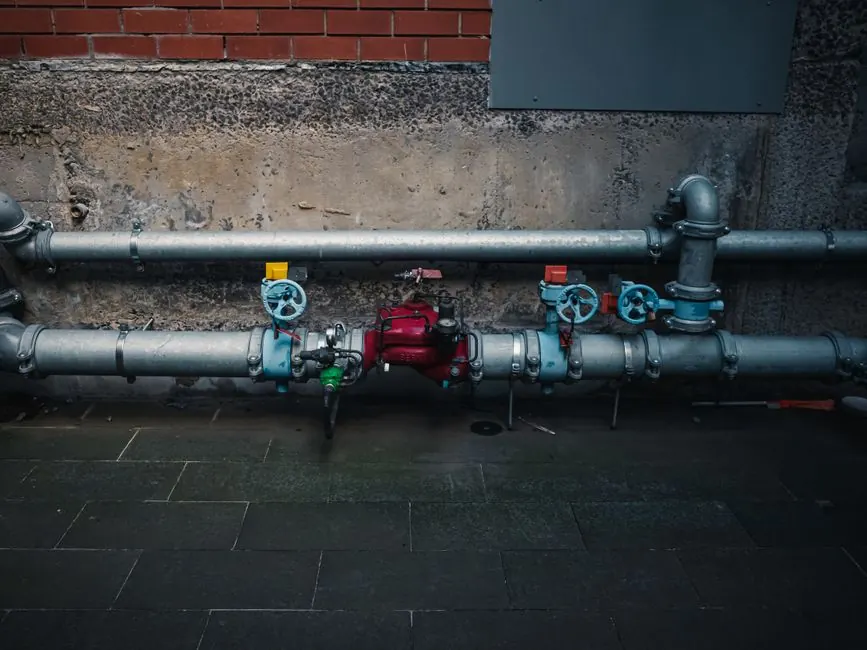
If your sewer line has one isolated crack or a single root intrusion, repair it. If the pipe is collapsed, bellied, or made of Orangeburg or clay and failing in more than one spot, replace it. That is the whole decision in two sentences, and it is the same call we make on nearly every job in Sioux Falls.
What follows is how we actually get there: what we look for on camera, what repair and replacement cost here in 2026, and the local soil and tree conditions that push a Sioux Falls sewer line toward replacement faster than most homeowners expect.
The short answer: repair vs replace
Sewer line repair vs replacement in Sioux Falls SD comes down to three things: how much of the pipe is damaged, what the pipe is made of, and how old the rest of the run is. A 60-foot clay line from 1958 with one hairline crack is a repair. The same line with four cracks, a 2-inch belly, and roots at every joint is a replacement - patching it just buys you another service call next spring.
Here is the rule of thumb our technicians use on site:
- Repair when damage is isolated to one section, the pipe is PVC or cast iron in otherwise good shape, and the total repair is under roughly 30% of replacement cost.
- Replace when damage spans multiple joints, the pipe is Orangeburg, clay, or galvanized, or the line has already been repaired twice in five years.
- Replace when the line is under a mature tree, has a negative slope, or has standing water visible on camera.
We do not guess at this. We run a camera, mark the depth, and show you the footage before you decide anything.
Why sewer lines fail in Sioux Falls
Sioux Falls sewer lines fail for reasons that are specific to this city: heavy clay soil that shifts with freeze-thaw cycles, mature elms and cottonwoods whose roots hunt water, and a housing stock that ranges from 1890s Victorian to 2020s suburban builds. The soil here expands when wet and contracts hard in January, and that movement is what cracks old clay tile.
Three failure patterns show up again and again:
- Root intrusion at joints. Clay tile sewer lines were laid in 3-foot sections with mortar joints. Every joint is a root entry point. A cottonwood 20 feet away can send roots 30 feet to find that moisture.
- Bellied pipe. The ground under a section of pipe settles, the pipe sags, and waste pools instead of draining. You get slow drains, then backups, then a smell in the basement.
- Orangeburg collapse. Orangeburg pipe - a tar-paper-and-pitch product used from roughly 1945 to 1972 - deforms into an oval and eventually crushes flat. There is no repairing Orangeburg. It has to come out.
If you are already dealing with backups from any of these, our team handles emergency plumbing repair Sioux Falls SD around the clock, including nights and weekends.
How we decide: camera inspection and pipe condition
Sewer line inspection in Sioux Falls South Dakota is the step that turns a guess into a decision. We feed a self-leveling camera down the cleanout and record the full run, then mark the depth and location of every defect with a sonde locator so we know exactly where to dig - or where not to.
On the footage, we are looking for six things:
- Pipe material (clay, cast iron, PVC, Orangeburg, galvanized)
- Crack length and whether it runs with or against the flow
- Offset joints and separated sections
- Belly depth - anything over 1 inch of standing water is a problem
- Root mass and how much of the pipe diameter it blocks
- Overall slope from the house to the city main
You watch the screen with us. If we recommend replacement, you will see why on the monitor, not just hear it from a clipboard. For homes where the sewer is fine but the drains are slow, the fix is usually simpler - drain cleaning Sioux Falls SD clears the line without any digging at all.
Repair vs replacement: a side-by-side comparison
Sewer line repair or replace in Sioux Falls South Dakota is a decision with real money attached, so here is the honest comparison. Repair is faster and cheaper up front. Replacement is more disruptive once but usually the last time you pay for that line.
Repair
- Best for: one isolated crack, a single root cut, a short collapsed section under a lawn
- Typical time: 3 to 6 hours
- Lifespan added: 3 to 10 years, depending on pipe material
- Disruption: minimal - one small excavation or a spot liner
Replacement
- Best for: Orangeburg, clay with multiple failures, bellied runs, lines under mature trees
- Typical time: 1 to 3 days
- Lifespan added: 50+ years with new PVC or HDPE
- Disruption: a trench across the yard, or almost none with trenchless methods
When the numbers are close, we lean toward replacement. Paying twice for the same line is the most common regret we hear from homeowners who chose the cheaper option two winters ago.
What does sewer line replacement cost in Sioux Falls SD?
Sewer line replacement cost in Sioux Falls SD runs roughly $4,000 to $12,000 for a typical residential line in 2026, with most single-family jobs landing between $6,000 and $9,000. The range is wide because depth, length, and surface restoration drive the price more than the pipe itself.
What moves the number:
- Length of the run. Most Sioux Falls homes have 40 to 80 feet from the house to the city main.
- Depth. Local code requires burying sewer lines below the frost line - we dig to 5 to 7 feet in this climate.
- Surface. Sod is cheap to restore. Concrete driveway, patio, or mature landscaping is not.
- Method. Open trench is usually the least expensive. Pipe bursting and CIPP lining run higher but avoid the trench.
- Permits and inspection. The city requires a permit and a post-installation inspection on sewer replacement.
Spot repairs typically run $600 to $2,500 depending on depth and access. We give you a flat price before we start, and it does not change because we hit a rock.
Trenchless sewer line repair in Sioux Falls
Trenchless sewer repair in Sioux Falls is the method we reach for when the line runs under a finished driveway, a patio, or a 60-year-old elm we would rather not cut down. Instead of digging a 60-foot trench, we work from two small access pits at each end of the damaged section.
Two trenchless methods cover almost every job here:
- Cured-in-place pipe (CIPP) lining. We pull an epoxy-saturated liner through the existing pipe and cure it in place. You end up with a smooth new pipe inside the old one. Best for pipes that are cracked but still round.
- Pipe bursting. We pull a bursting head through the old line that fractures it outward while dragging new HDPE pipe behind. Best for collapsed, bellied, or undersized lines, and it can upsize the pipe.
Trenchless jobs in Sioux Falls typically finish in one to two days and cost 15% to 40% more than open trench. When you factor in replacing a concrete driveway, the math often flips in favor of trenchless. If you are weighing a full line replacement against other aging plumbing in the house, our sewer line replacement Sioux Falls SD page walks through the process start to finish.
Common mistakes we see homeowners make
The most expensive sewer mistakes in Sioux Falls are not the ones people make during the repair - they are the ones they make before calling anyone. Here is what we see on repeat.
- Pouring chemicals down a backed-up line. Caustic drain cleaner does nothing to roots and can soften older clay or Orangeburg pipe further.
- Choosing the cheapest bid without a camera inspection. A quote without footage is a guess. Two contractors can quote the same job $5,000 apart because one of them never looked.
- Repairing Orangeburg. It cannot be repaired. Anyone offering to patch Orangeburg is selling you a callback.
- Ignoring slow drains for a year. A slow drain in October becomes a sewage backup in January, and emergency work costs more than scheduled work.
- Skipping the post-replacement inspection. The city requires it, and it protects you if the line ever fails again.
If you are also noticing rusty water or a water heater that cannot keep up, that is a separate issue - our water heater repair Sioux Falls SD team handles those on the same visit.
When to call a professional
Call a professional the moment sewage backs up into a floor drain, a tub, or a basement sink - that is not a plunger problem, it is a main line problem. Also call if you smell sewer gas indoors, if multiple fixtures drain slowly at once, or if you hear gurgling from the toilet when the washing machine drains.
We are a state-licensed plumbing contractor serving Sioux Falls and the surrounding communities. We run the camera, show you the footage, and give you one flat price for the repair or the replacement - no pressure either way. If the line can be repaired safely, we will tell you. If it needs to come out, you will see exactly why on the screen before we touch a shovel.
Frequently Asked Questions
Should I repair or replace my sewer line in Sioux Falls SD?
Repair if the damage is one isolated spot and the pipe is PVC or cast iron. Replace if the pipe is Orangeburg or clay, if there are multiple failures, or if the repair cost exceeds about 30% of replacement. A camera inspection settles it in under an hour.
How do I know if my sewer line needs replacement in Sioux Falls South Dakota?
Four signs point to replacement: repeated backups within 12 months, roots returning after a cleaning, standing water visible on camera, or Orangeburg pipe. If two or more apply, replacement is almost always the better long-term spend.
How much does sewer line replacement cost in Sioux Falls?
Most residential replacements in 2026 land between $6,000 and $9,000, with the full range running $4,000 to $12,000. Depth, run length, surface restoration, and whether you choose trenchless or open trench drive the final number.
What is trenchless sewer line repair in Sioux Falls SD?
Trenchless repair fixes or replaces the sewer line through two small access pits instead of a continuous trench. CIPP lining and pipe bursting are the two methods we use. Jobs typically finish in one to two days and cost 15% to 40% more than open trench.
Will insurance cover sewer line replacement?
Standard homeowners insurance usually excludes sewer lines, but many policies offer an optional sewer backup endorsement that covers cleanup and sometimes the line itself. Check your policy before work begins - we can document the failure for your claim either way.
Get help with Plumbing in Sioux Falls
If your sewer is backing up or you just want to know what is under the yard before it becomes a problem, we will run the camera and give you a straight answer. Call Emergency Plumbing Sioux Falls at +17136551138 and we will get a technician out to look at your line.